
The Weekly Nerd

April 19-25 2026
Welcome to The Weekly Nerd, the official newsletter of The Astrology Nerd. Thank you so much for subscribing.
You, my subscribers, have the honor of receiving this issue of The Weekly Nerd in your inbox. Congratulations. You are ahead of the curve.
Enjoy!
Transits of the Week
19 April, 3:44 PM MST - Mars conjunct Saturn
Mars slows down when conjunct Saturn. Given how Mars is, this can actually be a good thing. This transit is excellent for slow, sustained energy over a long period of time. Instead of a sudden burst of Mars energy that burns out quickly, you can work steadily at a project over the course of many hours, or even the whole day.
20 April, 04:22 AM MST - Mercury conjunct Saturn
Mercury is also slowed down when conjunct Saturn. Since Mercury is the planet of the mind and of communication, your mind may run slower today. You might have trouble thinking on your feet or getting your words out. On the upside, though, you will likely have the ability to do sustained mental work over the course of many hours.
20 April, 02:45 PM MST - Mercury conjunct Mars
This transit speeds up the mind. You may think and talk fast under this influence. The inability to think on your feet will disappear at this time. You could come up with the snappiest comebacks on the spot with Mercury and Mars together. The downside is that energy comes in short bursts. You might get a lot done in little time, but then crash as if you came to the end of a sugar high. Anxious and racing thoughts are also possible.
23 April, 6:58 PM MST - Venus sextile Neptune
This can be an exciting transit if you're single. You might meet someone suddenly and unexpectedly. If you have a partner, you might suddenly decide that tonight is a date night. It's also possible to unexpectedly come into some money at this time. It probably won't be a huge windfall, so keep expectations reasonable, but a little extra cash could find its way to you. You might also spontaneously decide to attend a concert or go to a museum or art gallery.
25 April, 5:46 PM MST- Sun square Pluto
This transit could have you dealing with some dark or heavy subject matter. This would be a good time for a session with your therapist if you have one, though the session won't be easy since this is a square. You might feel blocked by people in power, like police officers, politicians, the IRS, or your country's tax agency. You could also be blocked by your own psyche. Unconscious behaviors may interfere with what you want to accomplish today.
Please keep in mind that these are the general transits of the day, applicable to the collective but not necessarily to you as an individual. If any of these are activating planets in your own chart then they will be more relevant to you specifically.
Weekly Article - My House System is Better than Yours. Or, How to Start a Fight at an Astrology Conference
The "houses" in astrology (a division of the local horizon where one is born) are very controversial. Not in their existence or importance in interpreting the horoscope. No, that's almost universally agreed upon. The how-to of dividing up the horizon into slices of sky known as houses is what causes tension among astrologers. No one can agree on the "correct" way to do this. Everyone has their favorite and some are insistent that theirs is the only "right" one.
So, why is this? How is it that astrologers can all agree on the signs and how to calculate the ascendant and midheaven, but not on where all the houses should be drawn?
Robert Hand, in his book "Horoscope Symbols", points out that the fact that astrology hasn't settled this after 4,000+ years probably means that there isn't one correct answer. Most agree that the middle of a house is the most powerful part. Planets there seem to be expressed strongest in that particular house rather than one before or preceding. Indeed, when a planet is near a house cusp, most astrologers, myself included, will interpret it in both houses and let the client decide which one feels most correct. With the exception of the chart angles (ascendant/descendant and midheaven/nadir) when they serve as house cusps, a planet near the cusp of two houses seems to be a bit of both, not having fully transitioned from one to the next.
Indeed, the Gauquelin studies showed that planets just past the chart angles, in the cadent houses, were the most powerful as far as predicting success in different career fields. Saturn just past the midheaven, in the ninth house, correlated strongly with the birth charts of eminent scientists. This goes against what astrology had previously taught about the strength of a planet. It was believed that planets were most powerful in angular houses and weakest in the cadent ones. So, if astrology was wrong about this aspect of house division, could it be wrong about other things regarding the houses?
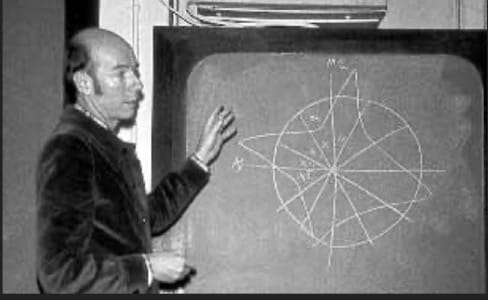
There are two types of house divisions. The first and most common is the "quadrant" house systems. This refers to the fact that horoscopes are divided into 4ths and then the house cusps are drawn in between each of these four sections. Most quadrant house systems use the angles as house cusps. The ascendant serves as the first house cusp, midheaven as the tenth, the descendant as the seventh, and the nadir as the fourth. These form the four quarters of which the "intermediate" house cusps are drawn.
Quadrant house systems are further divided into space-based or time-based systems. Time-based systems, like Placidus, measure how long it takes for the sun to go from the ascendant to the MC and then, using complicated math that I don't understand, draws the house cusps from there.
Space-based systems, on the other hand, divide up the space between the angles, again, using some complicated math I don't know anything about, and divide up the houses like that. Koch houses, also sometimes called "birthplace" houses, is a good example of this system.
The other broad category of house systems is that of the "equal" systems. The quadrant systems divide the houses up unequally. Some houses then turn out to be larger than others. My third and ninth houses, for example, are extra-large in both Koch and Placidus and my sixth and twelfth houses are extra-small. Furthermore, the quadrant systems completely break down at extreme norther or southern latitudes.
The equal systems, like equal and whole-sign, dispense with all that complicated math and simply draw all the houses the exact same size, 30°. The equal house system takes the degree of the ascendant and makes that the degree of each subsequent house cusp. For example, in my chart, 17° Sagittarius would be the cusp of my first house since that's my ascendant. The second house cusp would then be 17° Capricorn. The third house cusp would be 17° Aquarius and so on and so forth.
Whole-sign houses also use the ascendant to determine the first house cusp, but instead of making each house cusp the same degree as the ascendant, each whole sign is synonymous with a house. To use my chart as an example again, my first house is the entire sign of Sagittarius in whole-sign houses. The second house is all of Capricorn, the third house all of Aquarius, and so on and so forth.
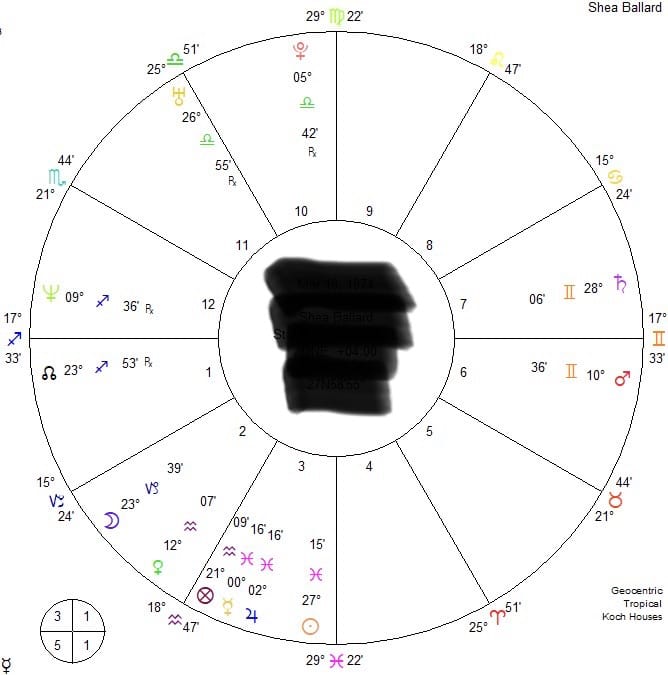
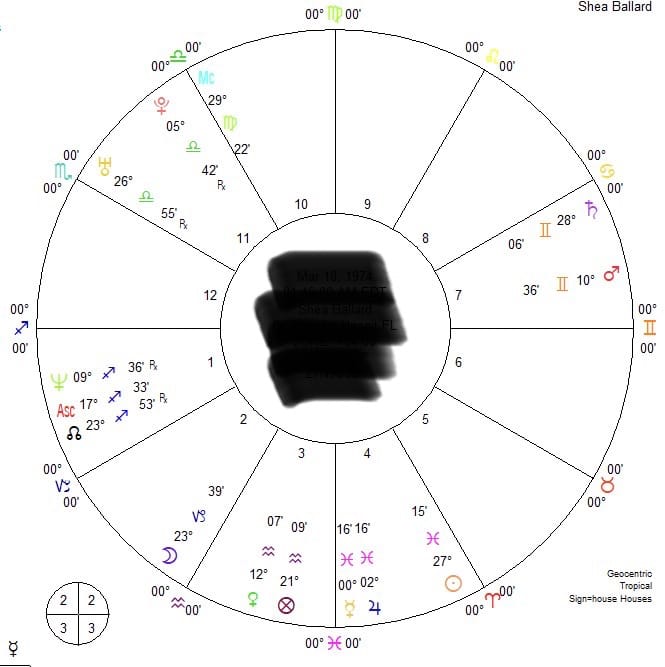
My chart in two different house systems. On the left is Koch houses and on the right is whole-sign.
In the equal house systems, the ascendant does not serve as the first house cusp, nor does the midheaven serve as the tenth house cusp. The angles of the horoscope are completely disconnected from the houses.
For those of us who are used to working with quadrant house systems, this can be disoriented. The way I learned (with Placidus houses), planets in the twelfth house are above the horizon. In other words, above the ascendant. This is not so in equal house systems like whole-sign. In quadrant systems, for example, I have Neptune just 8° above the horizon, and so, of course, in the twelfth house. But in whole-sign, my Neptune is in the first. This messes with my head, but only because I was taught the other way and so the way whole-signs does it feels weird to me.
So, what are the advantages and disadvantages of each? Quadrant houses emphasize the angles of the horoscope (ascendant, descendant, MC, and nadir). These are universally agreed to be powerful points and the equal systems put them in the background. This, I feel, is a big point for the quadrant systems and a major drawback for the equal ones.
As mentioned earlier, though, the quadrant systems completely break down at extreme latitudes. The chart of someone born in Alaska or Iceland, for example, is going to be a complete mess in the quadrant systems. If someone born in those places wanted me to do their chart, I would really have no choice but to use either equal or whole sign. All the quadrant systems simply wouldn't work at all. That, of course, is a major drawback for the quadrant systems. Equal and whole-sign eliminate that whole mess.
Proponents of equal and whole-sign like to point out how simple these systems are. No complicated math. In the days before computers, these would have been the easiest house systems to calculate. If you're calculating a chart by hand using, say, Placidus (which I have done), you have to use something called a "table of houses" and do a lot of math. It's very tedious and time consuming. I was so happy when I got my first astrology software.
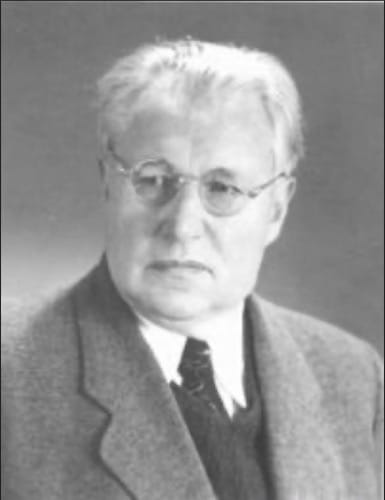
So, which house system do I use? I favor Koch houses. I do a lot of predictive work and Koch houses are especially useful for timing purposes. This house system was developed in the 1970s and named for a German astrologer named Dr. Walter Koch. And well, you know how the Germans are. Sticklers for precision, they make the trains run on time and, it seems, they make the planets run on time, too. This is why it's my favorite house system. Planets crossing Koch houses tend to have more immediate effects than with other house systems.
Ultimately, it comes down to what you're comfortable with. Most tend to favor what they learn with because it's familiar. I have noticed a lot of younger astrologers (late-Millennial and early-Gen-Z) really love whole-sign houses. It's probably because that house system was rediscovered in the 1990s through Project Hindsight, a huge astrology project that translated a lot of old texts from Latin and Ancient Greek. A resurgence in "classical" astrology followed the publication of these translations. I imagine younger astrologers probably learned with whole-signs, thus its popularity.
I am intrigued by whole-signs and want to learn more, but I'm unsure about it. In whole-signs, I have Neptune in the first house, which I feel actually fits better than Neptune in the twelfth. However, whole signs puts my Sun in the fourth house instead of the third, which doesn't make any sense to me. Yes, I have the Sun close to the fourth house, so some of that applies, but I really feel like the Sun in the third describes me so much better. So, I have a point for and a point against whole-signs. I think I'll just continue using Koch houses for now. Until I get this sorted out.
So, is my house system better than yours? Is yours better than mine. It's hard to say because it's so subjective. Again, as Robert Hand pointed out back in the 70s, the fact that we haven't settled on one house system by now should tell us something. There probably isn't one truly "correct" house system.
I see the houses as like a color spectrum. Where does orange end and red begin? Exactly. It doesn't. Orange slowly blends into red. There isn't a single point where you can say "this is the official dividing line between orange and red." No such point exists.
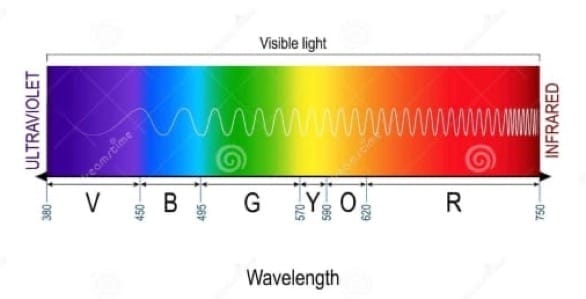
I think it's the same with the houses. At some point, the first house starts to slowly blend into the second. Where is the point where the first house ends and the second begins? Again, it's probably like the difference between orange and red. You know red when you see it. You know orange when you see it. But that gray area in between? Yeah, that's kinda subjective. We're all going to disagree on that.
Shea (The Astrology Nerd)

Celebrity Birthdays this Week
April 19 - Tim Curry (80)
British Actor

April 20 - Andy Serkis (62)
British Actor
April 21 - James McAvoy (47)
British Actor
April 22 - Jack Nicholson (79)
American Actor
April 23 - Kal Penn (49)
American Actor
April 24 - Joe Keery (32)
American Actor and Musician
April 25 - Sam Fender (30)
British Musician
Astrology Trivia Question
No cheating. Don't use the internet.
Mars was the Roman God of War and where we get the name for the 4th planet from the Sun. What was the name of his Greek equivalent? Hint: He gave his name to a sign.
Answer to last week's question: Uranus was discovered on 13 March 1781 by William Herschel.
Recommended Astrology Book of the Week
Astrology for Beginners by William Hewitt
There are a number of books on Amazon called "Astrology for Beginners", but this is the one that I started with. It is a great introductory book that goes into enough detail to give you a good overview of astrology, but not so much detail you feel overwhelmed.
And that’s the end of The Weekly Nerd for this week. I hope you enjoyed it. Watch your inbox next Sunday for another one.
Have a wonderful week! And if no one has told you yet today, you are important and the world needs you.
Bye for now.
Shea (The Astrology Nerd)
Hey, did you know you can reply directly to this email? Yep, you can. And I’ll receive it in my inbox. Feel free to reply with questions, comments, suggestions, your favorite recipes, pictures of your pets, marriage proposals, your plans for world domination, whatever.
©️ 2026 The Astrology Nerd
This publication may be shared but not sold or altered in any way. Written by Shea Ballard. Photos from Canva or Pixabay.